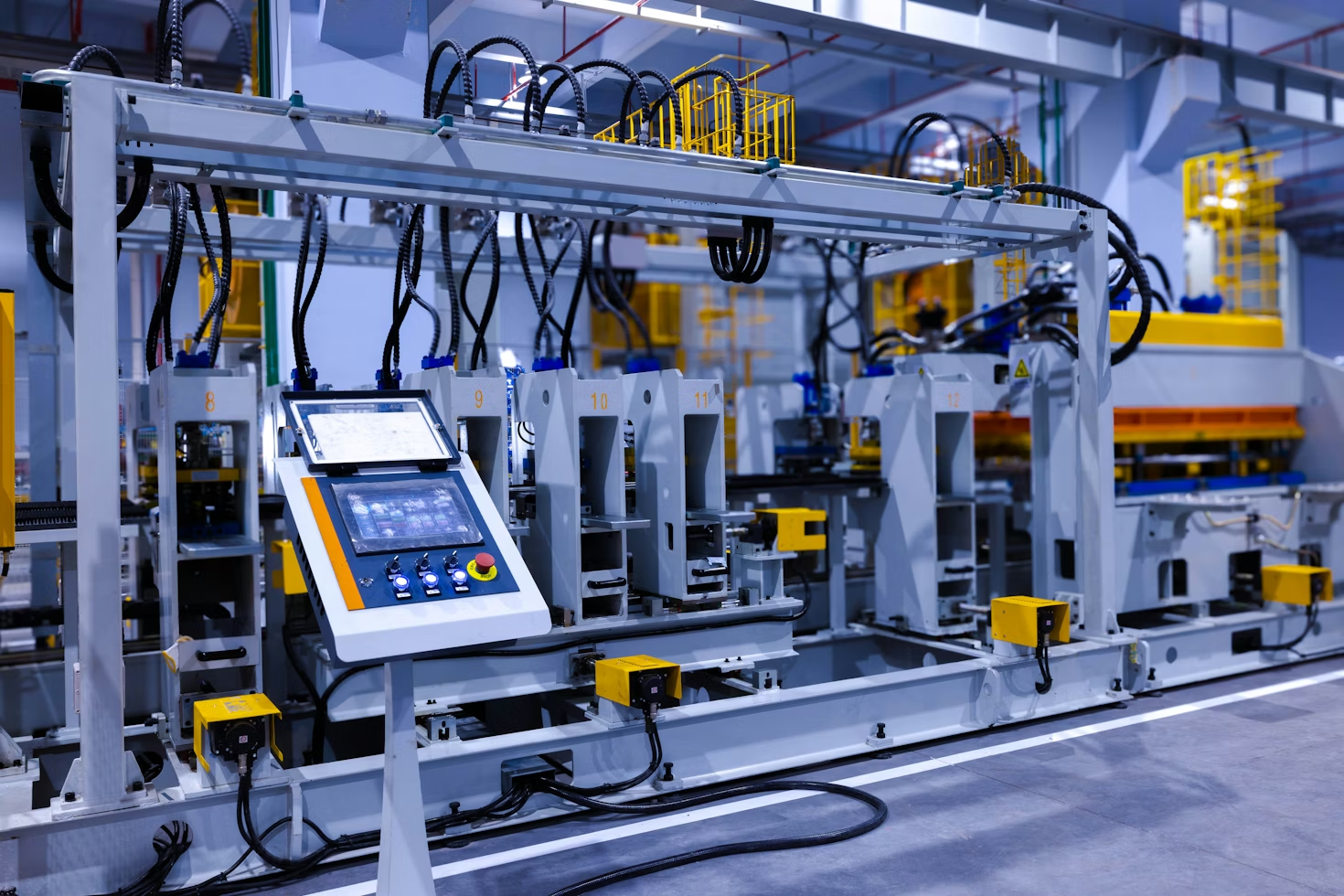
In modern production facilities, unexpected control system failure is one of the quickest routes to catastrophic operational downtime. Industrial Programmable Logic Controllers (PLCs) form the core brain of high-speed manufacturing lines, packaging cells, and water utility pumping skids. Yet, hundreds of brownfield plants continue to operate legacy platforms that original equipment manufacturers (OEMs) have long designated as obsolete.
Running unmapped, legacy control hardware turns everyday manufacturing into an expensive gamble. Investing in dedicated PLC upgrade services provides a strategic engineering pathway to modernise operational technology (OT), improve diagnostic visibility, and eliminate single points of failure without committing to full production line replacements.
The core engineering objective: Targeted PLC modernization isolates reliable field mechanical assets while replacing obsolete processing units and communications with modern, supported platforms—delivering industrial Ethernet performance and robust diagnostic capabilities at a fraction of line-replacement CapEx.
The Hidden Risks of Operating Obsolete Control Systems
When legacy controllers reach the end of their operational lifecycle, continuing to operate them incurs exponential financial and operational risks:
- Vanishing Spare Parts & Grey Market Costs: As manufacturers phase out older controller series, replacement CPU racks, power supplies, and analog I/O modules disappear from authorised supply channels. Maintenance teams end up scouring unverified secondary markets, paying massive premiums for refurbished parts with no performance warranties.
- Extended Breakdown Windows: When an unbacked or discontinued PLC fails, standard troubleshooting halts. Engineers often lose hours or days locating legacy programming cables, converting obsolete software projects, and hunting down compatible engineering laptops.
- Regulatory & Safety Deficits: Modern machinery directives, functional safety architectures, and HSE PUWER compliance standards require reliable safety interlocks, modern emergency stop monitoring, and verified safe-torque protocols that legacy PLC platforms cannot deliver.
- Industrial Cybersecurity Gaps: Legacy automation networks rarely account for cyber threats, lacking modern encrypted protocols, role-based access control, and isolation capabilities compliant with IEC 62443 industrial cybersecurity standards.
Why Choose Brownfield Retrofits Over Total Line Replacement?
A common misconception among plant managers is that modernising automation requires a comprehensive mechanical overhaul. In reality, mechanical machinery such as heavy-duty conveyors, mixing vessels, and hydraulic presses often outlives the electronics that govern them.
| Operational Metric | Total Line Replacement | Targeted PLC Upgrade Services |
|---|---|---|
| Capital Expenditure (CapEx) | High (six-to-seven-figure budget) | Fraction of the cost (targeted OT retrofit) |
| Operational Downtime | Weeks to months of plant cessation | Phased over planned maintenance shutdowns |
| Cabling & Mechanical Assets | Complete demolition and rebuild | Retains existing motors, skids, and infrastructure |
| Learning Curve | Extensive operator re-training required | Seamless continuity with improved diagnostic interfaces |
Targeted PLC upgrade services decouple reliable mechanical equipment from obsolete processing brains, delivering modern diagnostic capabilities and fieldbus speeds without unnecessary capital expense.
Critical Stages of an Engineering-Led PLC Upgrade
A seamless migration from legacy platforms to next-generation control systems requires a structured, multi-stage delivery process:
1. Automation Audits & Baseline Data Retrieval
Before touching a wire, engineers run an Automation Health Check to evaluate control panel conditions, inspect internal power supplies, and pull verifiable program backups from active CPUs.
2. Control Hardware & Industrial Network Architecture
The migration strategy defines the target platform—such as upgrading legacy hardware to modern Siemens Simatic S7-1500, Rockwell ControlLogix, or Mitsubishi iQ-R series. Simultaneously, legacy serial loops (DH+, Modbus RTU, Profibus) are transitioned to high-speed industrial Ethernet protocols (Profinet, EtherNet/IP, Modbus TCP).
3. Logic Conversion & Drive Integration
Software routines are translated into modern IEC 61131-3 compliant programming environments. Coordinated motion systems, variable speed drives, and panel components are updated alongside system integration partners like Sprint Electric and KOSMEK to guarantee synchronized motor control. For comprehensive drive assessments and motor retrofits, explore our dedicated Industrial Drives & Motion capabilities and guide on drive retrofit services.
4. Rigorous FAT/SAT Validation & Commissioning
Factory Acceptance Testing (FAT) validates code in an emulation environment prior to installation. Site Acceptance Testing (SAT) and rigorous testing & commissioning then take place during a scheduled plant window, verifying all physical I/O terminations, network handshakes, and safety circuits prior to production restart.
Sector-Specific Benefits of Control Modernisation
PLC upgrades provide measurable performance advantages across distinct manufacturing and process environments:
Food & Beverage Processing
Continuous processing skids, pasteurisers, and Clean-in-Place (CIP) installations demand strict recipe control and temperature tolerances. Upgraded controllers deliver real-time data tracking, automated batch logging, and hygienic compliance without unplanned line stops.
High-Speed Packaging Lines
Modern packaging environments rely on millisecond motion profiles across filling systems, cartoning lines, and palletising cells. Upgrading legacy PLCs enables higher throughput, faster changeovers, and smooth integration with smart sensors and robotics.
Water & Wastewater Treatment
Continuous pumping stations and dosing facilities require high availability and telemetry visibility. Upgraded control hardware ensures continuous operational resilience across remote MEICA infrastructure.
Frequently Asked Questions (FAQs)
What are PLC upgrade services?
PLC upgrade services encompass the complete engineering process of replacing ageing, obsolete, or unsupported programmable logic controllers with modern, supported automation platforms. This includes risk assessment, control panel wiring, code translation, industrial network modernization, and on-site commissioning.
Can a PLC be upgraded without changing field instruments and motors?
Yes. Brownfield automation engineering isolates the control layer from the field assets. By deploying compatible interface modules or remote I/O adapters, modern PLCs communicate directly with existing field wiring, sensors, and motor control panels, saving substantial capital investment.
How do engineers prevent production downtime during a PLC migration?
Upgrades are engineered, mapped, and bench-tested well before arriving on site. By conducting structured Factory Acceptance Testing (FAT), mapping I/O schedules, and converting code beforehand, physical installation and commissioning are condensed into scheduled weekend shutdowns or planned plant maintenance windows.
Why is vendor-neutral engineering expertise important?
Many industrial facilities run a mixed plant floor containing hardware from Siemens, Rockwell Automation (Allen-Bradley), Schneider Electric, Omron, and Mitsubishi. A vendor-neutral systems integrator assesses your facility's operational demands objectively, choosing the optimal migration path for your line rather than pushing a single manufacturer's catalogue.
Protect Your Facility from Unplanned Outages
Do not wait for an unrecoverable CPU fault or blown I/O module to disrupt your production schedule. Upgrading legacy control architecture secures your plant's data visibility, protects operational throughput, and ensures long-term operational resilience.
Consult with Smart Flow Engineering today to discuss your control architecture or book a comprehensive on-site Automation Health Check with our certified engineering specialists.
Discuss a PLC UpgradeProfessional note: This article provides general engineering information and is not a substitute for a site-specific risk assessment, competent engineering inspection, or manufacturer safety certification. Control architecture and functional safety systems must comply with applicable PUWER regulations and machinery safety standards.