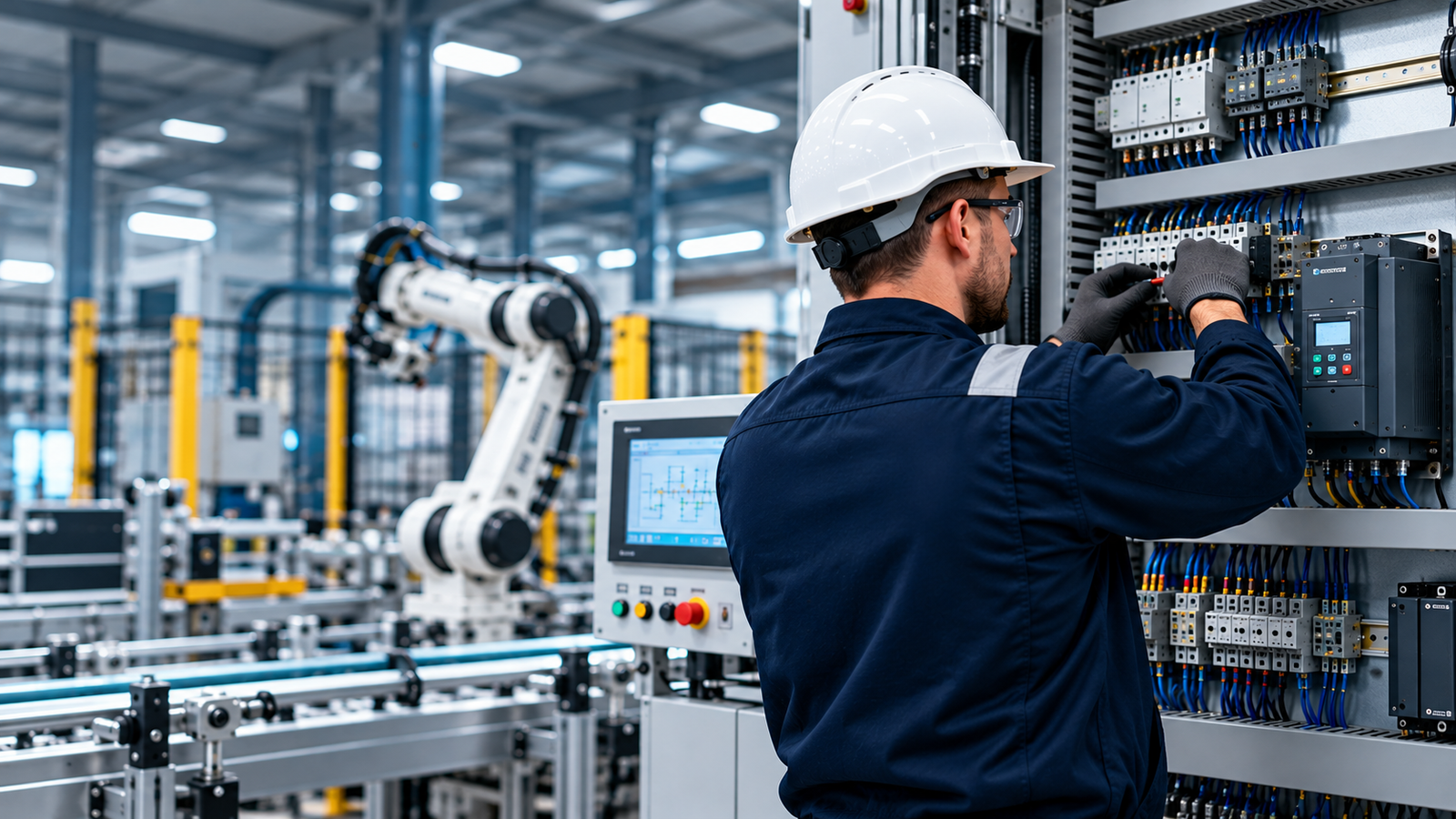
Industrial automation services keep production lines, motors and control systems doing what they should, day after day. For UK manufacturers, the right support can mean fewer breakdowns, steadier output and more life from the equipment you already own.
But automation isn't just about buying new kit. Plenty of sites run machinery that still does the job and simply needs better control, regular maintenance or a targeted upgrade. That's where professional industrial automation services earn their keep: assessing what you have, finding the real problems and making practical improvements, without replacing everything by default.
This guide covers what industrial automation services involve, when your site might need them and how to choose the right engineering support.
What Are Industrial Automation Services?
Industrial automation services cover the engineering work needed to design, integrate, maintain, test and improve automated industrial systems. In practice, that means helping machinery and processes run with less manual intervention, while giving operators clear visibility and control.
Depending on your site, the work might include:
- Automation and control systems: managing machinery and production processes through industrial control technology.
- Electrical engineering: supporting industrial electrical installations, equipment and control infrastructure.
- Drives and motion control: making sure motors and driven equipment run at the speed and performance you need.
- Testing and commissioning: checking that equipment has been installed correctly and works as intended.
- Maintenance and upgrades: fixing faults, improving existing systems and extending the working life of equipment.
Every site is different. A plant with recurring machine faults needs a different approach from one adding a new production line. The key is to understand the operational problem first, then decide what engineering work is actually needed.
Why Industrial Automation Matters for UK Manufacturers
UK manufacturers are under constant pressure to keep production moving, control costs and hit delivery dates. When one piece of equipment fails, the impact rarely stops at that machine. A faulty motor drive or an unreliable control panel can hold up a whole line and pile extra pressure on your maintenance team.
Well-maintained automation systems help you manage that risk in four ways.
Cut unplanned downtime
Unexpected failures disrupt schedules, delay orders and tie up engineers in fault-finding. Regular inspections help you spot developing issues before they become disruptive. When something does go wrong, experienced engineers can trace the cause and recommend the most practical repair.
The aim isn't to prevent every possible failure. It's to reduce avoidable disruption and get equipment back into service as quickly as possible.
Keep production consistent
Automated processes only work well when the equipment, electrical systems and control functions work together. Get that right and you'll see steadier processes and fewer avoidable stoppages.
Take a line with inconsistent motor speeds. Checking the drive configuration, control signals and associated electrical equipment will tell you far more than swapping parts and hoping for the best. Finding the real cause beats replacing components without knowing why they failed.
Get more from existing equipment
Replacing industrial machinery means significant cost, installation work and production downtime. In many cases the existing system is still fit for purpose and just needs a targeted upgrade or remedial work, such as replacing an obsolete component, improving a control arrangement or sorting out a motor drive issue.
A proper assessment shows whether repair, upgrade or replacement makes the most sense.
Support your maintenance team
Internal teams have to juggle planned maintenance, breakdowns, inspections and production demands. Bringing in external industrial automation specialists adds technical capacity when your own resources are stretched or a project needs specific expertise. It's particularly useful during upgrades, installations, testing and commissioning.
Signs You May Need Industrial Automation Support
Automation problems rarely start with a complete failure. Smaller issues usually show up first. Here are five signs it's worth reviewing your systems.
Frequent equipment faults
If the same machine or component keeps developing faults, replacing the failed part may not fix the underlying cause. The problem could sit in the electrical connections, drive settings, control logic or somewhere else in the wider system. A structured investigation helps you find the source and decide on the right corrective action.
Ageing control systems
Older control systems can run reliably for years. But obsolete components, limited technical support and hard-to-find spares make maintenance harder over time. An engineering assessment can show which parts are still suitable, which carry operational risk and whether a phased upgrade would help.
Rising maintenance demands
If a machine needs more and more intervention, it's time to look at its condition and how it's being maintained. Repeated faults can point to wear, unsuitable operating conditions or components nearing the end of their life. Spotting those patterns helps your team make better decisions about repairs and investment.
Poor integration between equipment
Most production sites have machinery installed at different times, often from different suppliers. When equipment doesn't communicate or work together as expected, troubleshooting gets complicated and manual workarounds creep in. Automation and electrical engineering support can review the interfaces between systems and suggest practical integration improvements.
Planned equipment changes
Installing new machinery, modifying a line or upgrading an existing drive system brings its own technical challenges. Planning the electrical integration, testing and commissioning early helps you catch problems before they affect normal operations.
Repair, Upgrade or Replace?
One of the most common questions manufacturers face is whether to keep maintaining existing equipment or invest in a replacement. There's no universal answer. It depends on the condition of the equipment, parts availability, operational risk and the cost of each option.
- Repair makes sense when the fault is understood, replacement parts are available and the equipment is still right for the job.
- Upgrade makes sense when the equipment is fundamentally sound but certain components or functions need improving. A targeted upgrade can fix a specific limitation without replacing the whole system.
- Replace deserves serious consideration when equipment has become unreliable, parts are hard to get, the system no longer meets your needs or the cost and risk of keeping it going are no longer acceptable.
An engineering assessment lets you compare the three properly. The goal is a sound operational decision, not the biggest possible project.
How to Choose an Industrial Automation Services Provider
Not every project needs a full redesign or major capital spend. The right approach depends on your equipment, your operational needs and the problem you're trying to solve. When comparing providers, keep these points in mind.
Check their technical capabilities
Look for engineering support that matches what you need, whether that's control systems, industrial electrical work, drives and motion, or testing and commissioning. It's also worth asking whether they can support the whole project or only one part of it.
Start with the actual problem
A good assessment begins with your operational needs. Are you dealing with repeated breakdowns? Is a drive no longer suitable for the application? Are you planning an upgrade? Do you need extra engineering capacity for an installation? The clearer your requirements, the easier it is to scope the work and compare solutions.
Think about the full operational impact
The cheapest quick fix isn't always the cheapest option in the long run. Equally, replacing equipment that could have been repaired or upgraded is an unnecessary expense. Weigh up maintenance needs, parts availability, installation costs and how the work will affect production.
Plan testing and commissioning properly
Installation is only one part of an engineering project. The finished system also needs appropriate checks to confirm it has been installed correctly and works as intended. Clear documentation and good communication with your site team make future maintenance easier too.
Why Testing and Commissioning Matter
Testing and commissioning are a core part of industrial electrical and automation work, especially when new equipment goes in or existing systems are modified. Skip the checks and installation, configuration or integration problems may only show up once the equipment is running.
The scope depends on the project, but it can include relevant electrical checks, verification of control functions, drive operation and confirmation that the equipment performs as expected. Commissioning is also your chance to spot outstanding issues, record findings and make sure the right people understand the finished work.
For manufacturers and system integrators alike, planning this stage properly helps avoid delays and makes for a smoother handover.
How Smart Flow Engineering Can Support Your Site
Smart Flow Engineering provides industrial automation services across the UK, with a focus on drives, controls and electrical systems. We start by understanding the equipment you already have and what you actually need, then support the work to maintain, improve or upgrade your systems.
Our services include:
- Automation and control systems to support your equipment and process requirements.
- Testing and commissioning to help verify installations and system operation.
- Electrical and MEICA engineering to support industrial project requirements.
- Drives and motion for motor-driven equipment and associated control systems.
Every site has different demands. Some projects start with an existing fault, others need extra engineering capacity for planned installation, integration or commissioning work. Either way, the starting point is the same: understanding what your business needs and how we can help.
If your team is reviewing ageing equipment, planning an upgrade or looking for additional engineering support, we'd be glad to talk through your requirements.
Final Thoughts
Industrial automation is about more than technology. It's about keeping equipment dependable, supporting production and making informed decisions about maintenance and investment.
For UK manufacturers, the best approach isn't always to replace older systems or automate every process. It's to work out where improvements are really needed and choose solutions that make practical sense for your operation. With the right engineering support, you can fix equipment issues, plan upgrades with more confidence and get more from the infrastructure you already have.
Looking for industrial automation services in the UK? Contact Smart Flow Engineering to talk through your automation, electrical engineering, drives or testing and commissioning requirements. Visit smartfloweng.com or call +44 1234 440 530 to start a conversation.
Frequently Asked Questions
What do industrial automation services include?
They can include automation and control systems, electrical engineering, drive systems, equipment integration, maintenance, testing and commissioning. The exact scope depends on your site and the project.
Can industrial automation services help reduce downtime?
Appropriate maintenance, fault investigation and targeted improvements can help reduce avoidable interruptions. Results depend on the equipment, the underlying problems and the work carried out.
Do I need to replace old industrial automation equipment?
Not necessarily. Some older equipment keeps running reliably with the right maintenance. An assessment can show whether repair, upgrade or replacement is the best route.
Who needs industrial automation services?
Manufacturers, industrial sites, machine builders and system integrators may all need automation engineering support for maintenance, new installations, system integration and upgrades.
When should I bring in an automation engineering company?
Ideally during planning, especially if the project involves electrical integration, drives, control systems or commissioning. Early conversations help identify technical requirements and potential issues before installation begins.
Discuss your automation requirements
Talk through maintenance, upgrades, drives, electrical engineering or commissioning support for your site.
Contact our engineering team